Video Editing & Motion
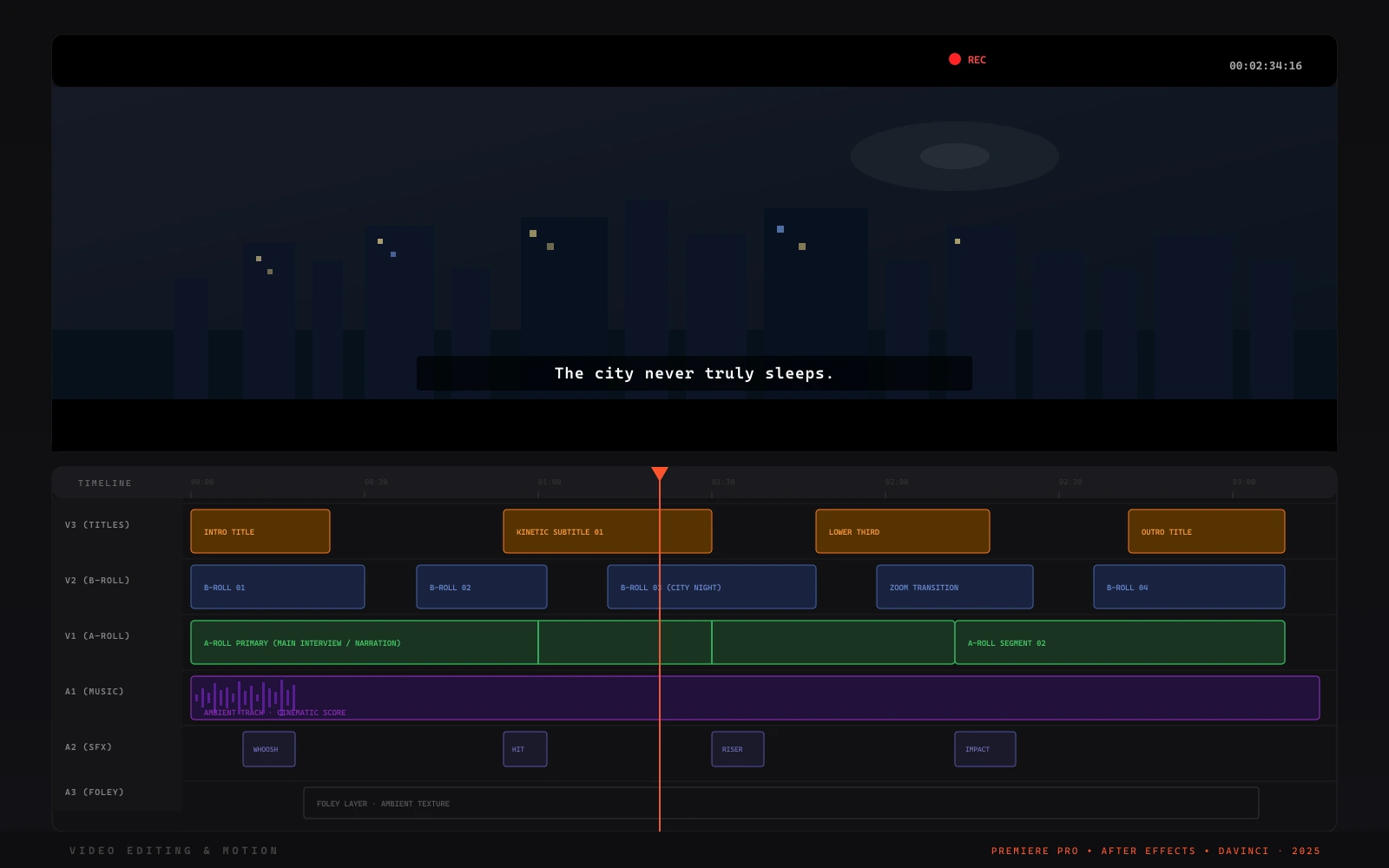
Edited video content demonstrating structured pacing, narrative cutting, kinetic typography, multi-layered sound design, and color grading.
What is this project?
A creative editing showcase illustrating how raw footage is assembled into polished video content with intentional pacing, animated graphical callouts, and clean multi-track audio mixing.
What needed to be solved?
Raw video footage frequently lacks rhythm, visual progression, and polished sound design, leading to viewer drop-off in the first 30 seconds.
What was the intended outcome?
Transform raw footage into structured, engaging video content with intentional pacing, animated graphical callouts, and immersive soundscapes.
Execution & Implementation
MY ROLE: Video Editor & Motion Designer
A-roll assembly, narrative cutting, and pacing refinement in Premiere Pro.
B-roll overlays, visual zooms, and animated kinetic typography captions in After Effects.
Multi-track audio sound design including ambient foley, risers, and vocal leveling.
Rec.709 cinematic color correction and contrast adjustments in DaVinci Resolve.
System & Process Workflow
Rough Cut Assembly
Review source takes, trim pauses, and assemble the primary narrative timeline.
B-Roll & Visual Accents
Layer supportive footage, framing zooms, and motion graphics at key emphasis points.
Captions & Typography
Add animated kinetic captions synchronized frame-by-frame with speech rhythm.
Sound Design & Mastering
Layer multi-track sound effects (whooshes, risers, hits) with vocal audio ducking.
Why I Built It This Way
Specific choices made during the project — and the reasoning behind each.
Sound Design Before Color Grade
Completed the full sound design and SFX mix before touching color grading.
Audio is 50% of the viewer experience but often rushed at the end. Finishing sound first forces you to evaluate timing, pacing, and emotional beats before visual polish distracts from structural issues.
Kinetic Subtitles Over Static Captions
Used animated, word-by-word kinetic subtitles throughout instead of static caption bars.
Static caption bars are invisible after 3 seconds — viewers stop reading them. Word-by-word kinetic captions keep pace with speech and maintain attention, especially critical for short-form vertical content.
Warm Grade for Lifestyle, Teal-Orange for Cinematic
Used context-specific color grading — warm golden tones for lifestyle content, teal-orange split for cinematic/dramatic sequences.
A single grade applied across all content looks uniform and amateurish. Matching grade style to content genre is what separates commercial-quality edits from generic content.
Technologies & Software
Results & Impact
Interested in a Similar Project?
Let's discuss your goals, requirements, and timeline. I'll help you define the next step.
Start Project Discussion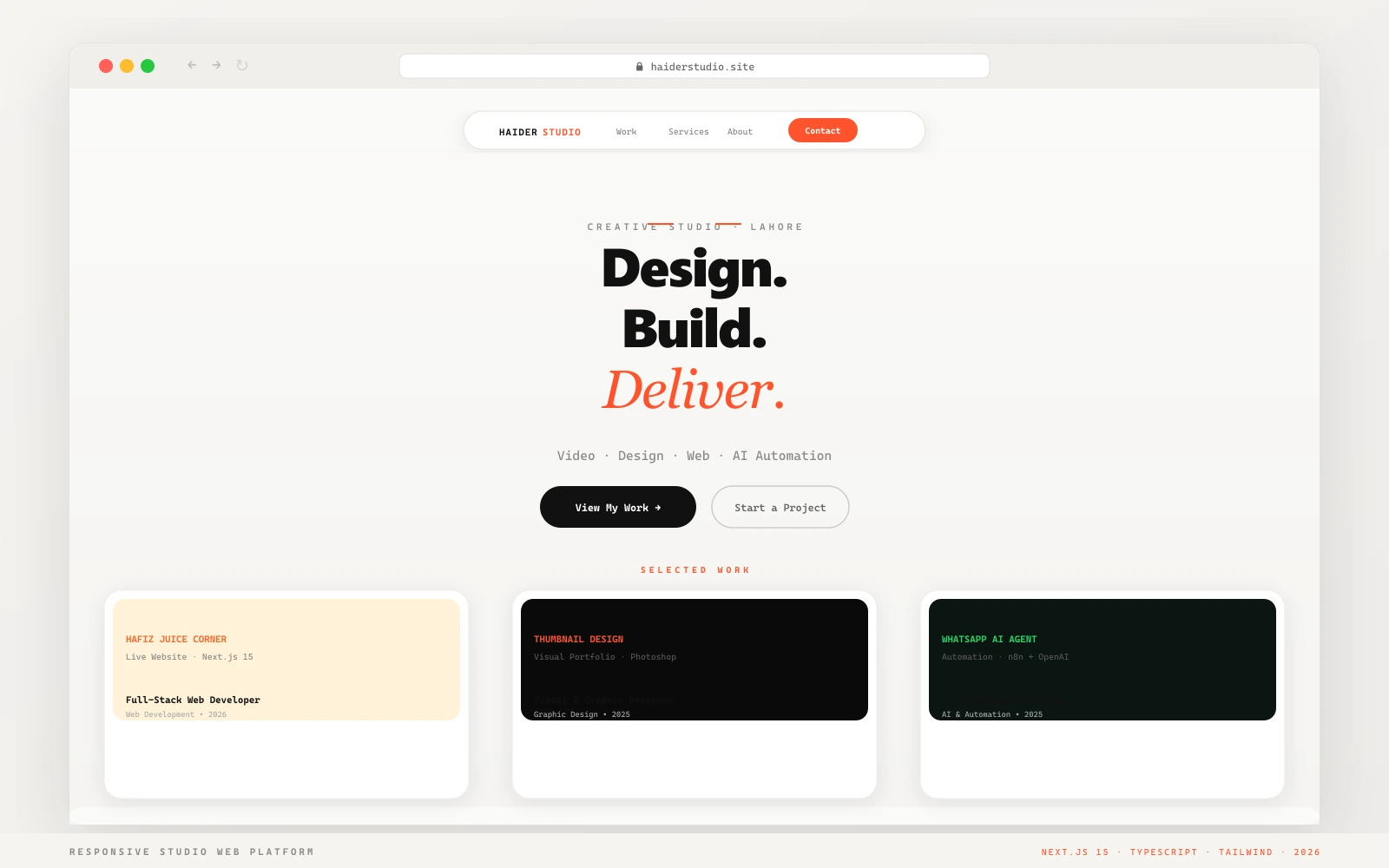
Responsive Studio Web Platform
A responsive website built with Next.js 15, React 19, TypeScript, and Tailwind CSS designed for clarity, fast static rendering, and client project inquiries.